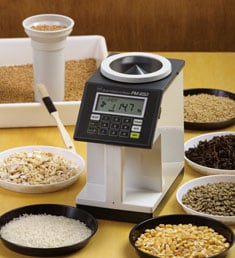
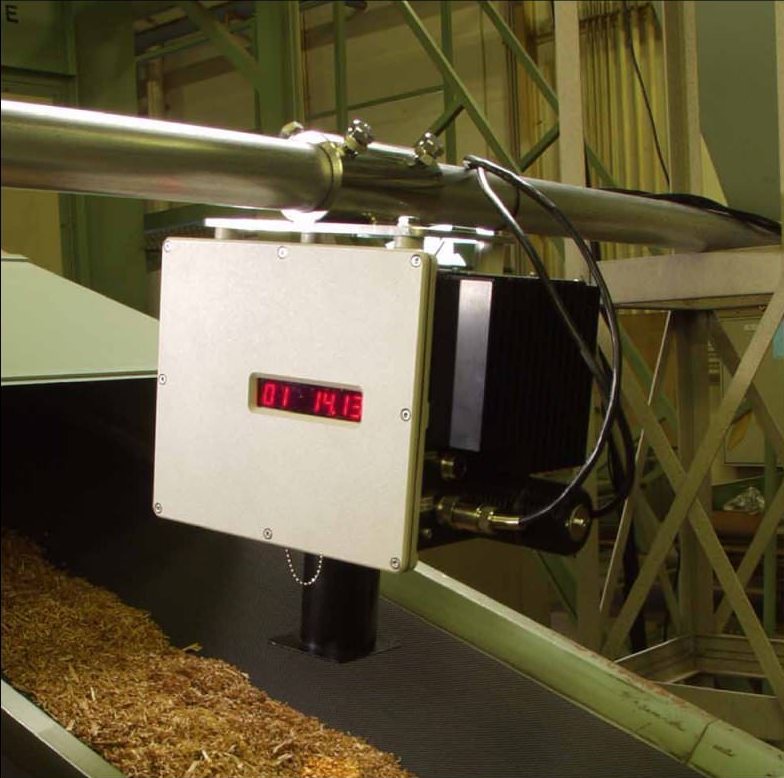
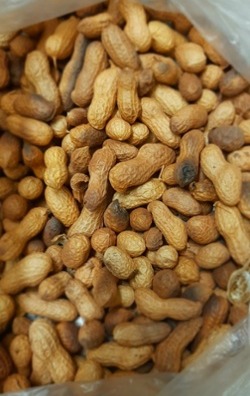
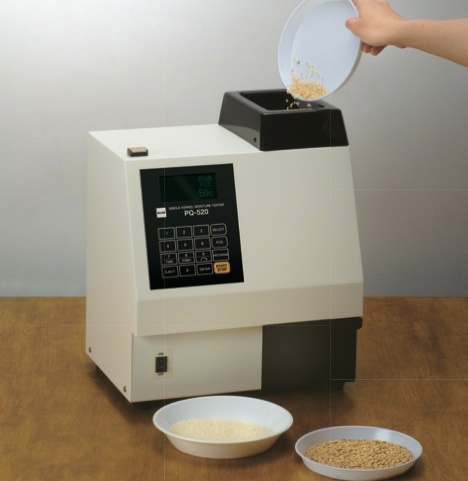
For quite some time, wheat farmers would take their freshly harvested crops to market instead of drying and storing them. This is largely because it takes quite a bit of time to properly dry and manage wheat for long-term storage, and if there’s one thing that farmers have in short supply, it’s time.
Kett Marketing
Recent Posts
The Importance of Precise Wheat Moisture Content
Topics: Moisture Meter
Predicting Corn Maturity with Moisture Levels
In 2019 and 2020, the United States was, by far, the largest producer of corn across the globe, reaching an astonishing 345 million metric tons of corn in one year alone, or over one-third of the whole global corn production.
Topics: Moisture Meter
How Moisture Impacts Barley
Have you heard about the acronym FAT TOM? It’s shorthand for those in the food production and food-grade crop industries and refers to the factors and conditions that allow bacteria and other contaminants to grow, which can lead to food spoilage.
Topics: Moisture Meter
Managing Soybean Harvest Timing
Soybean crops typically begin to reach their full maturity in late September as the seasons start to change. When the days get shorter and temperatures start to cool, leaves on soybean plants slowly turn yellow. By mid-October and November, these leaves turn brown and fall off, leaving the mature soybean pods behind, ready for harvest.
Topics: Moisture Meter
Harvesting Corn Based on Moisture Levels: What You Should Know
While most growers understand that in an ideal world, corn crops would all be harvested when they reach the standard moisture level of 15.5 percent, these same growers would be quick to tell you that when it comes to farming, there is no “ideal world,” and that each growing season brings it's own unique set of challenges.
Topics: Moisture Meter
The Countless Uses for Composition Analyzers
Are you developing pharmaceuticals, processing food, or manufacturing chemicals? If precision and contamination control matter to your business, a composition analyzer can be your most valuable quality assurance tool.
Today’s regulatory environment means that companies have a legal obligation to prevent their products from contamination, but it’s not just about compliance. Consumers want to know that they can trust the products they buy. You also want to avoid the reputational damage that can happen when stories spread through word of mouth, social media, or news reporting about your products being unsafe or damaged.
Topics: Composition Analyzer
What Is Polymer Strain, and How Can You Detect It?
We rely on plastics and polymers for just about everything in our lives, from cars to toothbrushes, heart stents to eyeglasses. Even parts of the most technologically advanced airplanes like the Boeing Dreamliner are made from plastics.
Topics: polymer stress monitor
What’s So Smart About a Smart Online Process Analyzer?
We live in a world where we are increasingly surrounded by "smart" technology. From smartwatches and other wearable devices to virtual assistants and even smart lawnmowers, and ceiling fans, smart technology is all around us.
Topics: Moisture Meter
Harvest Tips for Late-Maturing Crops
As evening frost begins to gather on our grass at home, we pull our fall sweaters out of storage and temperatures start to dip at night, it’s time to start thinking about those crops that are still waiting in the field for harvest.
Topics: Moisture Meter, Riceter, Harvest Determiner
Better Than the Farmer’s Almanac: The Harvest Determiner
The Old Farmer’s Almanac was first published in 1792. It was created by Benjamin Franklin to predict things like the times for the rising and setting of the sun, as well as the patterns of the tides, and overall weather predictions. And, as the name suggests, the Almanac served as a helpful guide, providing dates for farmers to know when to plow up the strawberry bed, or when to plant rutabagas.
Topics: Harvest Determiner